What is Bonded Trucking?
|
Why Bonded Trucking Matters
Bonded trucking gives importers flexibility. Instead of clearing customs right at the border — where space and time are limited — cargo can be moved under bond to an inland facility where clearance happens under less pressure. This reduces congestion at the crossing and speeds up the overall flow of goods.
Bonded Trucking at the San Diego–Tijuana Border
Carriers handling bonded freight must be authorized and follow strict customs procedures, since the cargo is technically still under customs control while in transit. A single paperwork error can hold up an entire load.
Did you know?
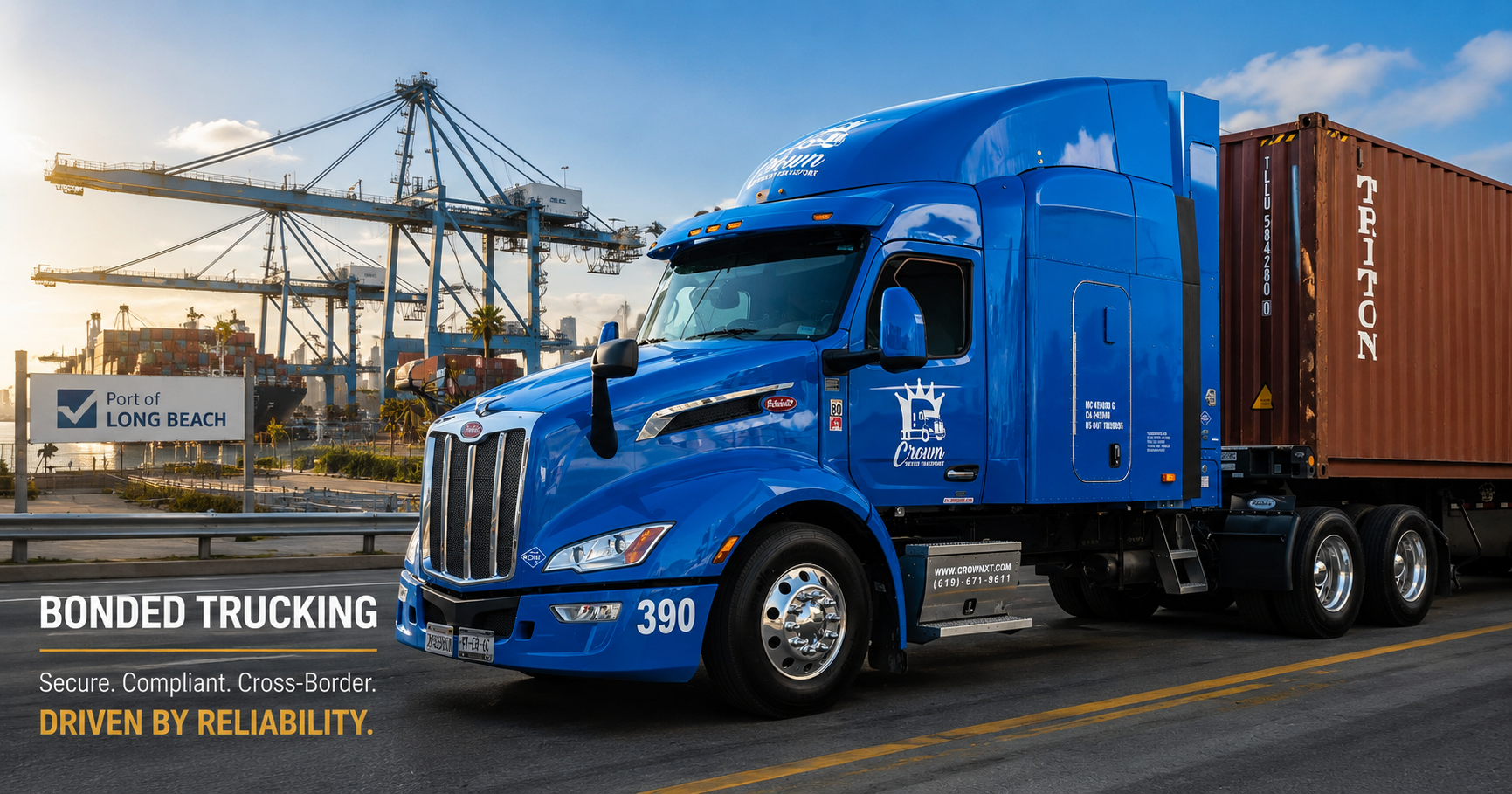
Bonded trucking requires more than moving freight—it demands security, compliance, and trusted cross-border operations. Crown Xpress Transport supports bonded shipments with industry-recognized programs including CTPAT, OEA, FAST, and RControl, helping keep freight secure and moving efficiently across the U.S.–Mexico border.
Common Types.
There are several types of bonded trucking services, depending on how freight moves through the customs process. The most common include in-bond transportation between ports and inland facilities, cross-border bonded shipments between the U.S. and Mexico, container drayage from ports to distribution centers or rail yards, and bonded warehouse transfers, where freight is moved under customs bond before duties are paid. Each type helps businesses move cargo securely while remaining compliant with customs regulations.
Related Terms
Learn more about Drayage